
All-Ceramic Dental Restorations Schenectady
Restorations that Blend Seamlessly with Your Smile
 At Capital Smiles, you shouldn’t have to choose between renewing your oral health and maintaining a smile that looks beautiful and natural. You deserve the best of both worlds, and all-ceramic restorations from our Schenectady team are the perfect solution. These high-quality crowns, inlays, onlays, and other customized prosthetics are designed to blend in with your remaining tooth structure in a pleasing and comfortable fashion. Would you like to learn more? Contact us today to request your consultation.
Why Choose Capital Smiles for All-Ceramic Dental Restorations?
- Beautifully Shade-Matched to Blend in with Your Natural Teeth
- Strong Ceramic Material that Stands the Test of Time
- Restorations Precisely Designed with Digital Impression Technology
Types of All-Ceramic Dental Restorations
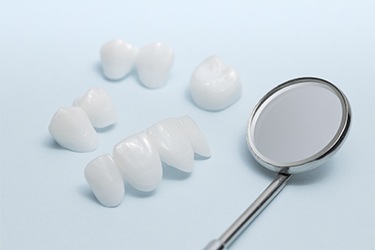
A dental restoration is essentially a custom-made prosthetic that is designed to either repair or replace a tooth. Restorations can be made of various materials, but Dr. Page and our team gravitate toward ceramic for its natural appearance and other benefits.
Here is a brief overview of some of the specific types of all-ceramic restorations that we offer:
Dental Crowns
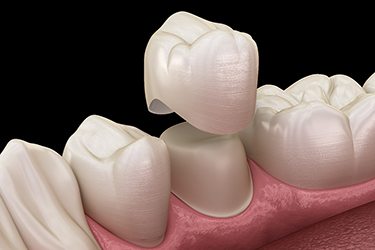
A dental crown fits over the entire visible portion of a tooth in order to protect it from damage and restore its shape and appearance. We often recommend all-ceramic crowns for front teeth because they are virtually indistinguishable from natural teeth.
Inlays & Onlays
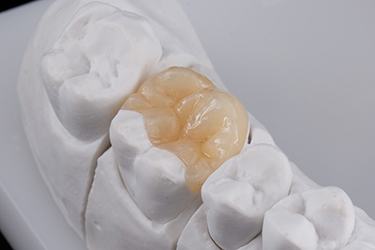
Inlays and onlays are sometimes called “partial crowns” because they cover only a portion of a tooth. These restorations are typically used on back teeth (molars and premolars). An inlay sits between a tooth’s cusps (in its grooves), whereas an onlay may cover one or more cusps. Ceramic inlays and onlays are often more durable than fillings while being more conservative than full crowns.
Dental Bridges
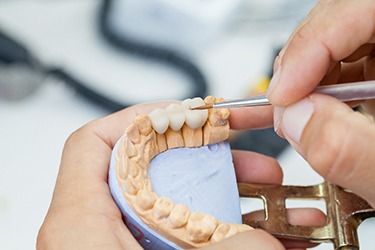
A dental bridge replaces one or more teeth in a row; it is firmly attached to the teeth that surround an empty space. A ceramic bridge can stand up to all the chewing forces of normal use and has the potential to last for a decade or longer.
Other Customized Prosthetics
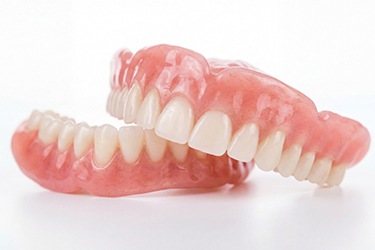
There are a number of other prosthetics that can be made out of ceramic. For example, dentures are sometimes made of this material. This is a particularly good choice for full upper and lower dentures, since ceramic materials (such as porcelain) tend to last longer than acrylic dentures.
The Benefits of All-Ceramic Dental Restorations

All-ceramic dental restorations offer some outstanding benefits:
- The single greatest advantage is the inherent aesthetic quality of ceramic materials. We are able to ensure a precise match in shade, shape, and size that blends in with what remains of your natural teeth — in fact, these restorations even have the same translucent qualities as the original enamel!
- With all-ceramic restorations, you won’t have to worry about a dark metal band forming near your gumline over time, which is a common concern regarding more traditional PFM (porcelain-fused-to-metal) crowns.
- All-ceramic restorations possess greater strength and durability than many people think. With the proper amount of routine at-home maintenance and professional intervention, they can thrive and function properly for many years.
- All-ceramic restorations eliminate concerns about metal allergies or sensitivities and allow for greater overall comfort and safety.
- All-ceramic restorations are very comfortable because, unlike their metal counterparts, they do not quickly transfer temperature changes to underlying teeth.
All-Ceramic Restorations FAQs
How Long Do All-Ceramic Dental Restorations Last?
The lifespan of an all-ceramic dental restoration depends on a few factors. Often, they last for 10 – 15 years or longer if they receive proper care. To help your restoration last as long as possible, you should adhere to an excellent oral hygiene routine, attend regular preventive checkups, and avoid biting down on very hard foods or hard non-food objects.
How Can I Tell if It Is Time to Replace My All-Ceramic Restoration?
During your routine checkups, Dr. Page and our team will check on the health of your restoration. If we notice any damage or loosening, we may recommend repairs or replacement.
Of course, you should call us right away if you notice any issues with your restoration between checkups. If it feels loose, has visible damage, or is severely discolored, it might need to be replaced. It is also a red flag if you notice pain or discomfort underneath or around the restoration.
Do All-Ceramic Dental Restorations Cost More than Metal Ones?
The cost of any restoration depends on various factors, including both the type of restoration and its size. Materials, lab fees, and preliminary dental work also have to be taken into account.
In some cases, ceramic restorations cost a bit more than their metal alternatives due to the detailed lab work that goes into fabrication, shade-matching, and other key components of the process. Many patients agree that having a high-quality, natural-looking restoration is worth the extra cost.
Our team will provide a straightforward cost estimate before you commit to any procedure. Also, keep in mind that dental insurance often covers up to 50% of the cost of all-ceramic restorations if they are considered medically necessary.
Can I Get an All-Ceramic Restoration if I Grind My Teeth?
Yes, most patients who grind their teeth can enjoy the benefits of all-ceramic dental restorations.
Although the ceramic may get worn away by habitual grinding and clenching, you can take measures to protect it from damage. For example, if you tend to grind and clench while you are asleep, you may need to use a nightguard. Our team will also make sure that your restoration is made of the strongest ceramic material that fits your unique situation.
Should I Replace My Metal Restoration with an All-Ceramic One?
If you have an old metal restoration that you are thinking about replacing, come talk to our team. If your metal crown, bridge, inlay, or onlay is still in good condition, there may not be any urgent need to replace it. However, if it is showing signs of wear or leakage, swapping it out for a ceramic alternative could do a lot to protect your oral health.
Of course, if you simply want to replace your metal restoration to improve the aesthetics of your smile, we can assist with that as well!