
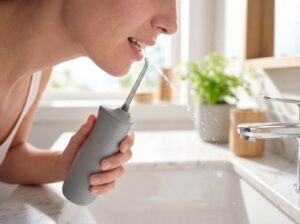
Your toothbrush only reaches about 60% of the surfaces of your teeth, so it is important that your oral hygiene routine also includes some interdental cleaning! Many people use old-fashioned string floss for this purpose, but in recent years, a lot of individuals have decided to use a water flosser instead. Is one option better than the other? This blog post provides a helpful comparison.
Pros and Cons of Dental Floss
Traditional dental floss has been around for generations, and it remains a reliable way to clean those tight spaces between teeth. Some of its best advantages include:
- Dental floss costs very little.
- It fits easily in a purse or travel bag.
- It works well for teeth with tight contact points.
- Floss gives you a great deal of control, so you can curve it around each tooth and thoroughly clean just below the gumline.
- No batteries, water tank, counter space, or special setup are required for traditional floss.
Of course, floss is not perfect. Some of its downsides include:
- It can feel awkward if you have limited hand strength, dexterity challenges, braces, bridges, or other dental work.
- It may cause soreness or bleeding if you snap it into the gums or use too much force.
- It only works well if you use proper technique.
Pros and Cons of Water Flossers
A water flosser uses a pressurized stream of water to clean between teeth and along the gumline. Some of the top benefits of this method include:
- A water flosser can make daily interdental care easier if you have braces, fixed bridges, dental implants, or sensitive gums.
- It often feels gentler than string floss, especially if your gums are tender.
- It can enable individuals with mobility challenges to maintain thorough oral hygiene.
Some common downsides of a water flosser include:
- A water flosser usually costs more than floss and needs storage space near your sink.
- It can create messy splashes in your bathroom until you learn the right angle and pressure setting.
- It does not scrape tooth surfaces in the same way string floss does, so it might not provide the same level of cleanness.
Which Should You Choose?
The best choice for your oral hygiene routine is the one you can use correctly and consistently. If you have healthy gums, tight spaces between teeth, and no trouble with hand movement, traditional floss may be enough for you. If you have orthodontia, restorations, implants, or difficulty with floss, a water flosser may be the better option for keeping up with daily care.
You do not always have to choose only one. Some patients benefit from both tools: floss for tight contacts and a water flosser for areas around dental work or along the gumline. Your dentist can also help you select the right interdental cleaner based on your gum health, tooth spacing, and current restorations.
Both traditional floss and water flossers have a rightful place in the world of oral hygiene. It might take a bit of trial and error before you settle on the specific product that best fits your needs.
Meet the Practice
Dr. Erin Page is a highly accomplished dentist who is proud to serve the Schenectady area. Under her leadership, our team offers a range of services. During routine checkups and exams, we are happy to answer questions and provide advice on daily oral hygiene. To learn more about us or to request an appointment, contact Capital Smiles at 518-800-3102.